




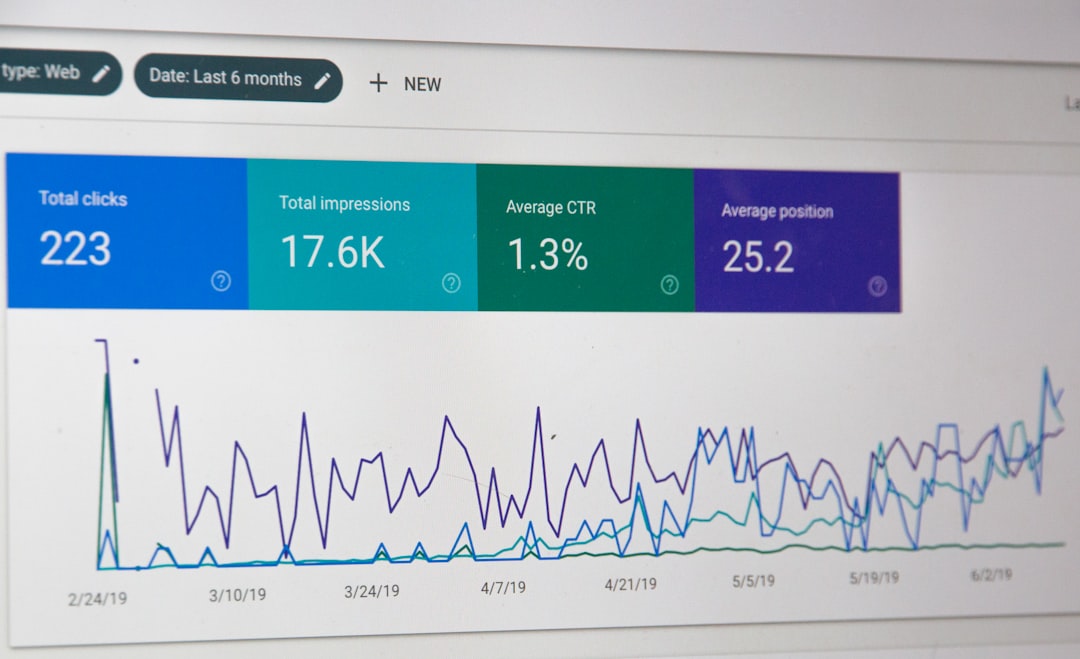
Landing page analytics provide essential data for digital marketing strategies by measuring user interactions at website entry points. These metrics help businesses evaluate marketing campaign effectiveness by identifying which page elements engage visitors and which require improvement. Through analysis of user behavior patterns, companies can make data-driven decisions to optimize user experience and increase conversion rates.
Key metrics include click-through rates, scroll depth, session duration, and user navigation paths. Landing page analytics also enable businesses to calculate the return on investment (ROI) for marketing campaigns. By connecting landing page performance data to specific marketing channels, organizations can identify which sources generate the highest conversion rates and revenue.
This information supports campaign optimization and guides budget allocation decisions. Companies can compare performance across different traffic sources, such as paid advertising, email marketing, social media, and organic search, to maximize marketing efficiency and achieve measurable business objectives.
Key Takeaways
- Landing page analytics are crucial for understanding user behavior and improving conversion rates.
- Key metrics like bounce rate, session duration, and conversion rate help identify optimization opportunities.
- Tools such as A/B testing, heatmaps, and session recordings provide actionable insights for design improvements.
- Integrating analytics with SEO and marketing automation enhances targeting and personalization efforts.
- Emerging technologies like AI and predictive analytics are shaping the future of landing page optimization.
Understanding User Behavior with Landing Page Analytics
Understanding user behavior is fundamental to enhancing the effectiveness of landing pages. Landing page analytics provide a wealth of information about how visitors navigate through a site, what captures their attention, and where they lose interest. For instance, metrics such as bounce rate and exit rate can indicate whether users find the content relevant or engaging.
A high bounce rate may suggest that the landing page does not meet user expectations or that the messaging is unclear. By delving into these metrics, marketers can pinpoint specific areas for improvement. Additionally, user behavior analysis can reveal the pathways that lead to conversions.
By tracking the journey of users from the moment they land on a page to the point of conversion, businesses can identify which elements are most effective in guiding users toward taking action. For example, if a significant number of users click on a particular call-to-action (CTA) button but do not complete the desired action, it may indicate that there are barriers preventing conversion further down the funnel. Understanding these behaviors allows marketers to refine their strategies and create more effective landing pages.
Key Metrics to Track with Landing Page Analytics
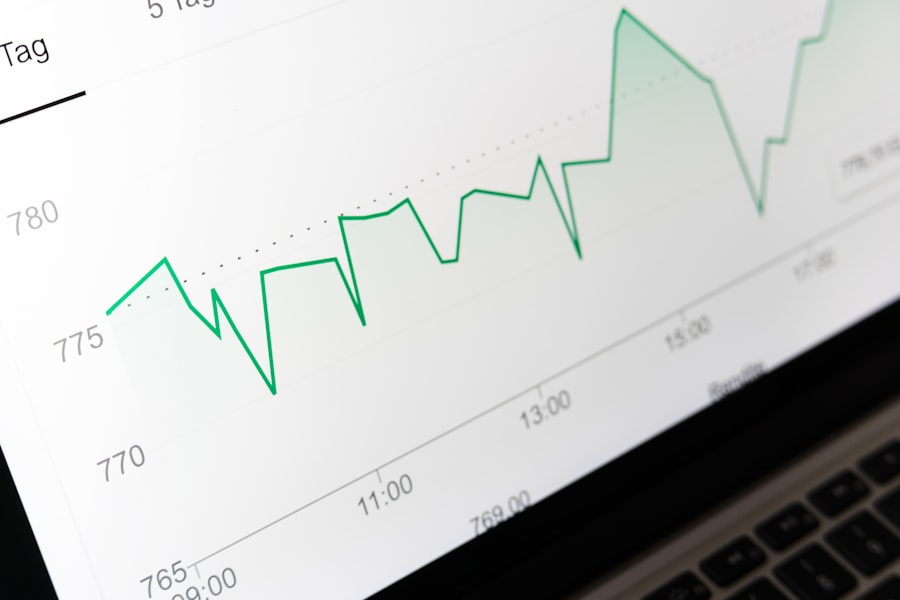
When it comes to landing page analytics, several key metrics stand out as essential for evaluating performance. Conversion rate is perhaps the most critical metric, as it directly measures the percentage of visitors who complete a desired action, such as signing up for a newsletter or making a purchase. A low conversion rate may signal issues with the landing page’s design, content, or overall user experience.
Tracking this metric over time can help marketers assess the impact of changes made to the page. Another important metric is the click-through rate (CTR), which measures how many users click on specific elements within the landing page, such as buttons or links. A high CTR indicates that users are engaged with the content and find it compelling enough to take action.
Conversely, a low CTR may suggest that the CTAs are not effectively positioned or that the messaging does not resonate with the target audience. Additionally, metrics like average session duration and pages per session provide insights into user engagement levels and can help identify areas where content may need to be enhanced or streamlined.
Improving Conversion Rates with Landing Page Analytics
Improving conversion rates is a primary goal for any business utilizing landing pages, and analytics play a pivotal role in achieving this objective. By analyzing user interactions and behaviors, marketers can identify friction points that hinder conversions. For instance, if analytics reveal that users frequently abandon forms halfway through completion, it may indicate that the form is too lengthy or complex.
Simplifying forms by reducing the number of required fields can lead to higher completion rates and ultimately boost conversions. Furthermore, landing page analytics can inform A/B testing strategies aimed at optimizing various elements of the page. By testing different headlines, images, or CTA placements, marketers can determine which variations yield better results.
Continuous testing and iteration based on analytics insights create a cycle of improvement that drives higher conversion rates over time.
Optimizing Landing Page Design with Analytics Insights
| Metric | Description | Example Value | Importance |
|---|---|---|---|
| Page Views | The total number of times the landing page was viewed. | 12,345 | High – Indicates overall traffic volume. |
| Unique Visitors | The number of distinct individuals visiting the landing page. | 8,765 | High – Measures reach and audience size. |
| Bounce Rate | Percentage of visitors who leave without interacting further. | 45% | High – Lower is better; indicates engagement. |
| Average Time on Page | Average duration visitors spend on the landing page. | 1 min 30 sec | Medium – Shows content relevance and interest. |
| Conversion Rate | Percentage of visitors completing a desired action (e.g., sign-up). | 7.5% | High – Key indicator of landing page effectiveness. |
| Click-Through Rate (CTR) | Percentage of visitors clicking on a call-to-action link or button. | 12% | High – Measures engagement with CTAs. |
| Exit Rate | Percentage of visitors who leave the site from the landing page. | 30% | Medium – Helps identify potential drop-off points. |
| Load Time | Average time taken for the landing page to fully load. | 2.3 seconds | High – Affects user experience and SEO. |
The design of a landing page is critical in capturing user attention and guiding them toward conversion. Analytics insights provide actionable data that can inform design decisions to enhance user experience. For instance, heatmaps can reveal where users are clicking most frequently on a page, allowing designers to place important elements—such as CTAs—where they are most likely to be seen and interacted with.
This data-driven approach ensures that design choices are not based solely on aesthetics but are grounded in actual user behavior. Additionally, understanding how users scroll through a landing page can inform layout decisions. If analytics show that users tend to drop off after scrolling a certain distance, it may indicate that key information should be repositioned higher on the page or that additional engaging content should be added to retain interest.
By leveraging analytics insights in the design process, businesses can create landing pages that not only look appealing but also function effectively in driving conversions.
A/B Testing and Landing Page Analytics
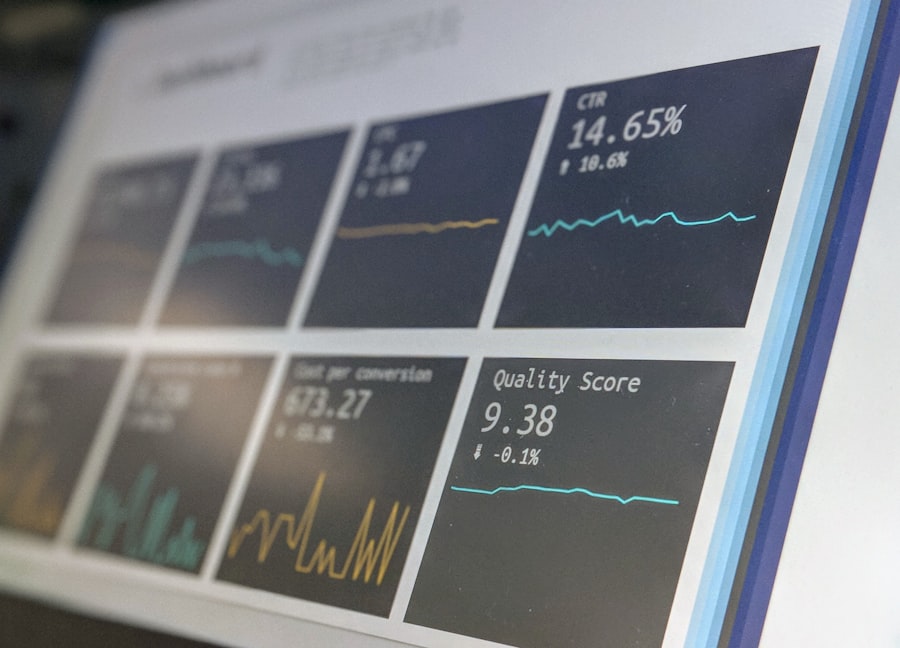
A/B testing is an essential method for optimizing landing pages based on analytics data. This technique involves creating two versions of a landing page—Version A and Version B—and directing traffic to both versions to see which performs better in terms of conversion rates or other key metrics. The insights gained from A/B testing can be invaluable in refining marketing strategies and improving overall performance.
For example, if one version features a different headline or image and results in significantly higher conversions, marketers can confidently implement those changes across their campaigns. Moreover, A/B testing allows for continuous improvement by enabling marketers to test one variable at a time while controlling for other factors. This precision helps isolate what specifically drives user behavior and conversion rates.
For instance, testing different colors for CTA buttons can reveal preferences among target audiences that may not have been previously considered. The iterative nature of A/B testing means that businesses can continually adapt their landing pages based on real-time data rather than relying on assumptions or outdated practices.
Utilizing Heatmaps and Session Recordings for Landing Page Optimization
Heatmaps and session recordings are powerful tools within landing page analytics that provide visual representations of user interactions. Heatmaps illustrate where users click, scroll, and hover on a page, offering insights into which areas attract attention and which are ignored. This information is crucial for optimizing layout and design elements; for example, if a heatmap shows that users are consistently clicking on an image expecting it to be a link but it is not clickable, this presents an opportunity to enhance user experience by making it interactive.
Session recordings take this analysis a step further by allowing marketers to watch real-time recordings of user sessions on their landing pages. This qualitative data provides context behind quantitative metrics; for instance, seeing users struggle with navigation or abandon forms can highlight specific pain points that need addressing. By combining heatmaps with session recordings, businesses gain a comprehensive understanding of user behavior that informs targeted optimizations aimed at improving engagement and conversion rates.
The Role of SEO in Landing Page Analytics
Search engine optimization (SEO) plays a significant role in driving traffic to landing pages, making it essential to integrate SEO considerations into landing page analytics strategies. Effective SEO practices ensure that landing pages rank well in search engine results, attracting organic traffic from users actively seeking relevant information or solutions. Analytics can help assess how well landing pages perform in terms of search visibility and traffic generation by tracking metrics such as organic search traffic and keyword rankings.
Furthermore, understanding how SEO impacts user behavior on landing pages is crucial for optimizing content and design. For example, if analytics show that certain keywords drive high traffic but result in low conversion rates, it may indicate a mismatch between user intent and the content provided on the landing page. In such cases, revising content to better align with user expectations can enhance both engagement and conversion rates.
By continuously monitoring SEO performance alongside landing page analytics, businesses can create a synergistic approach that maximizes visibility and effectiveness.
Integrating Landing Page Analytics with Marketing Automation
Integrating landing page analytics with marketing automation platforms enhances the ability to track user interactions across multiple touchpoints in the customer journey. Marketing automation tools allow businesses to segment audiences based on their behavior on landing pages and tailor follow-up communications accordingly. For instance, if a user visits a landing page but does not convert, automated email campaigns can be triggered to re-engage them with personalized content or offers based on their interests.
This integration also facilitates lead nurturing by providing insights into how users interact with subsequent communications after visiting a landing page. By analyzing engagement metrics from emails or retargeting ads linked to specific landing pages, marketers can refine their strategies to improve overall effectiveness. The synergy between landing page analytics and marketing automation creates a cohesive ecosystem where data-driven decisions lead to more personalized experiences for users.
Leveraging Landing Page Analytics for Personalized User Experiences
Personalization has become a key driver of engagement in digital marketing, and landing page analytics provide the data necessary to create tailored experiences for users. By analyzing user demographics, behavior patterns, and preferences gleaned from analytics tools, businesses can customize landing pages to resonate more deeply with their target audience. For example, if analytics reveal that certain segments respond better to specific messaging or visuals, marketers can create variations of landing pages designed specifically for those groups.
Additionally, dynamic content features allow businesses to present different information based on user behavior or characteristics in real-time. For instance, returning visitors could see personalized offers based on their previous interactions with the site or products they viewed earlier. This level of personalization not only enhances user experience but also increases the likelihood of conversion by making users feel understood and valued.
The Future of Landing Page Analytics: AI and Predictive Analytics
The future of landing page analytics is poised for transformation through advancements in artificial intelligence (AI) and predictive analytics. AI technologies enable marketers to analyze vast amounts of data quickly and efficiently, uncovering insights that would be challenging to identify manually. Machine learning algorithms can predict user behavior based on historical data patterns, allowing businesses to anticipate needs and preferences before they even arise.
Predictive analytics takes this concept further by enabling marketers to forecast future trends based on current data inputs. For instance, by analyzing past conversion rates alongside external factors such as seasonality or market trends, businesses can optimize their landing pages proactively rather than reactively. This forward-thinking approach allows organizations to stay ahead of competitors by continuously adapting their strategies based on predictive insights derived from comprehensive analytics data.
In conclusion, as technology continues to evolve, so too will the capabilities of landing page analytics. Embracing these advancements will empower businesses to create more effective marketing strategies that resonate with users while driving higher conversion rates across digital platforms.
FAQs
What is landing page analytics?
Landing page analytics refers to the process of collecting and analyzing data related to the performance of a landing page. This includes metrics such as visitor behavior, conversion rates, bounce rates, and traffic sources to understand how effectively the page achieves its goals.
Why is landing page analytics important?
Landing page analytics is important because it helps businesses optimize their pages to increase conversions, improve user experience, and maximize return on investment (ROI) from marketing campaigns. By understanding visitor interactions, companies can make data-driven decisions to enhance page effectiveness.
What key metrics are tracked in landing page analytics?
Common metrics include conversion rate, bounce rate, average time on page, traffic sources, click-through rate (CTR), exit rate, and user engagement indicators such as scroll depth and heatmaps.
How can I collect data for landing page analytics?
Data can be collected using web analytics tools like Google Analytics, Hotjar, or Adobe Analytics. These tools track user interactions, traffic patterns, and conversion events on the landing page.
What is a conversion in landing page analytics?
A conversion is a desired action taken by a visitor on the landing page, such as filling out a form, making a purchase, signing up for a newsletter, or downloading a resource.
How can landing page analytics improve marketing campaigns?
By analyzing landing page performance, marketers can identify which elements are working and which are not, allowing them to optimize content, design, and calls-to-action to increase conversions and reduce wasted ad spend.
What role does A/B testing play in landing page analytics?
A/B testing involves comparing two versions of a landing page to see which performs better based on analytics data. It helps in making informed decisions about design and content changes to improve user engagement and conversion rates.
Can landing page analytics help with SEO?
Yes, landing page analytics can provide insights into user behavior and engagement, which can inform SEO strategies by identifying content that resonates with visitors and areas that need improvement to reduce bounce rates.
How often should I review landing page analytics?
It is recommended to review landing page analytics regularly, such as weekly or monthly, depending on traffic volume and campaign duration, to promptly identify trends and make necessary adjustments.
Are there privacy concerns with landing page analytics?
Yes, collecting user data must comply with privacy laws such as GDPR and CCPA. It is important to inform visitors about data collection practices and obtain necessary consents when using analytics tools.



0 Comments