





Website analytics form the foundation of effective online business operations by collecting and analyzing data about user interactions, traffic patterns, and website performance metrics. This data enables organizations to make evidence-based decisions regarding user experience improvements, marketing optimization, and conversion rate enhancement. Website analytics provide essential information about visitor demographics, behavior patterns, and engagement levels, which helps businesses evaluate how well their websites serve user needs and objectives.
Website analytics also facilitate real-time monitoring of marketing campaign performance through key performance indicators including bounce rates, average session duration, page views, and conversion rates. This measurement capability allows businesses to assess which marketing strategies generate desired outcomes and identify underperforming initiatives. The continuous availability of performance data supports rapid strategy adjustments based on actual user behavior rather than assumptions.
Website analytics convert raw visitor data into measurable insights that guide strategic decision-making and support systematic improvements to digital marketing efforts and website functionality.
Key Takeaways
- Website analytics are essential for understanding user behavior and improving site performance.
- Setting clear goals helps tailor analytics efforts to measure what truly matters.
- Accurate data collection requires proper implementation of tracking codes and tags.
- Tools like A/B testing, heatmaps, and session recordings provide deeper insights into user interactions.
- Continuous monitoring and integration with marketing channels enable data-driven decisions and ongoing optimization.
Setting Clear Goals and Objectives for Website Analytics
Establishing clear goals and objectives is a fundamental step in leveraging website analytics effectively.
Organizations should begin by identifying what they hope to achieve through their website—whether it’s increasing sales, generating leads, enhancing brand awareness, or improving customer engagement.
These goals should be specific, measurable, achievable, relevant, and time-bound (SMART), providing a clear framework for analysis. For example, a retail website might set a goal to increase online sales by 20% over the next quarter. This objective can then be broken down into smaller targets, such as improving the conversion rate from 2% to 3% or reducing cart abandonment rates by 15%.
By establishing these specific objectives, businesses can focus their analytics efforts on tracking relevant metrics that align with their goals. This targeted approach not only streamlines data collection but also enhances the ability to measure success and make informed adjustments as needed.
Choosing the Right Analytics Tools for Your Website

Selecting the appropriate analytics tools is crucial for effective data collection and analysis. The market offers a plethora of options, ranging from free tools like Google Analytics to more advanced platforms such as Adobe Analytics or Matomo. Each tool comes with its own set of features, strengths, and weaknesses, making it essential for businesses to evaluate their specific needs before making a choice.
Factors to consider include the size of the website, the complexity of data required, budget constraints, and the level of technical expertise available within the organization. For instance, small businesses or startups may find Google Analytics sufficient for their needs due to its robust features and no cost barrier. It provides comprehensive insights into user demographics, traffic sources, and behavior flow.
On the other hand, larger enterprises with more complex requirements might benefit from a more sophisticated tool like Adobe Analytics, which offers advanced segmentation capabilities and deeper integration with other marketing technologies. Ultimately, the right analytics tool should align with the organization’s goals and provide actionable insights that drive strategic decision-making.
Implementing Tracking Codes and Tags for Accurate Data Collection
Once the appropriate analytics tools have been selected, implementing tracking codes and tags is the next critical step in ensuring accurate data collection. Tracking codes are snippets of JavaScript that need to be embedded in the website’s code to collect data on user interactions. This process can be straightforward for those familiar with web development but may require assistance from IT professionals for others.
Proper implementation is vital; any errors in code placement can lead to incomplete or inaccurate data. In addition to basic tracking codes, businesses should consider utilizing tag management systems (TMS) like Google Tag Manager. A TMS simplifies the process of managing multiple tracking codes by allowing users to deploy tags without modifying the website’s code directly.
This flexibility not only streamlines data collection but also enables marketers to quickly adapt to changing needs or campaigns without extensive technical intervention. By ensuring that tracking codes are correctly implemented and maintained, organizations can gather reliable data that reflects true user behavior on their websites.
Analyzing and Interpreting Website Data to Gain Insights
| Best Practice | Metric | Description | Recommended Benchmark |
|---|---|---|---|
| Track Unique Visitors | Unique Visitors | Number of distinct individuals visiting the website during a given period. | Depends on industry; aim for steady growth month-over-month |
| Monitor Bounce Rate | Bounce Rate (%) | Percentage of visitors who leave after viewing only one page. | Below 40% is excellent; 40-55% average; above 70% is high |
| Analyze Session Duration | Average Session Duration | Average time visitors spend on the website per session. | 2-3 minutes or higher indicates good engagement |
| Track Conversion Rate | Conversion Rate (%) | Percentage of visitors completing a desired action (e.g., purchase, signup). | 2-5% is typical; higher is better depending on goal |
| Use Event Tracking | Event Completions | Number of times specific interactions (clicks, downloads) occur. | Varies by event; track trends over time |
| Segment Traffic Sources | Traffic by Source | Breakdown of visitors by referral source (organic, paid, direct, social). | Balanced mix preferred; monitor for shifts |
| Monitor Page Load Time | Average Page Load Time (seconds) | Time it takes for a page to fully load in the browser. | Under 3 seconds recommended |
| Track Mobile vs Desktop Usage | Device Category (%) | Percentage of visitors using mobile, desktop, or tablet devices. | Mobile traffic often exceeds 50%; optimize accordingly |
| Set Up Goal Funnels | Goal Funnel Completion Rate (%) | Percentage of users completing multi-step processes (e.g., checkout). | Varies; aim to minimize drop-off at each step |
| Regularly Audit Analytics Setup | Data Accuracy | Ensuring tracking codes and goals are correctly implemented. | 100% accuracy; fix errors promptly |
The analysis and interpretation of website data are where the real value of analytics comes into play. Once data is collected through tracking codes and tools, it must be carefully examined to extract meaningful insights. This process involves looking beyond surface-level metrics like page views or unique visitors and delving into more complex analyses that reveal user behavior patterns and trends over time.
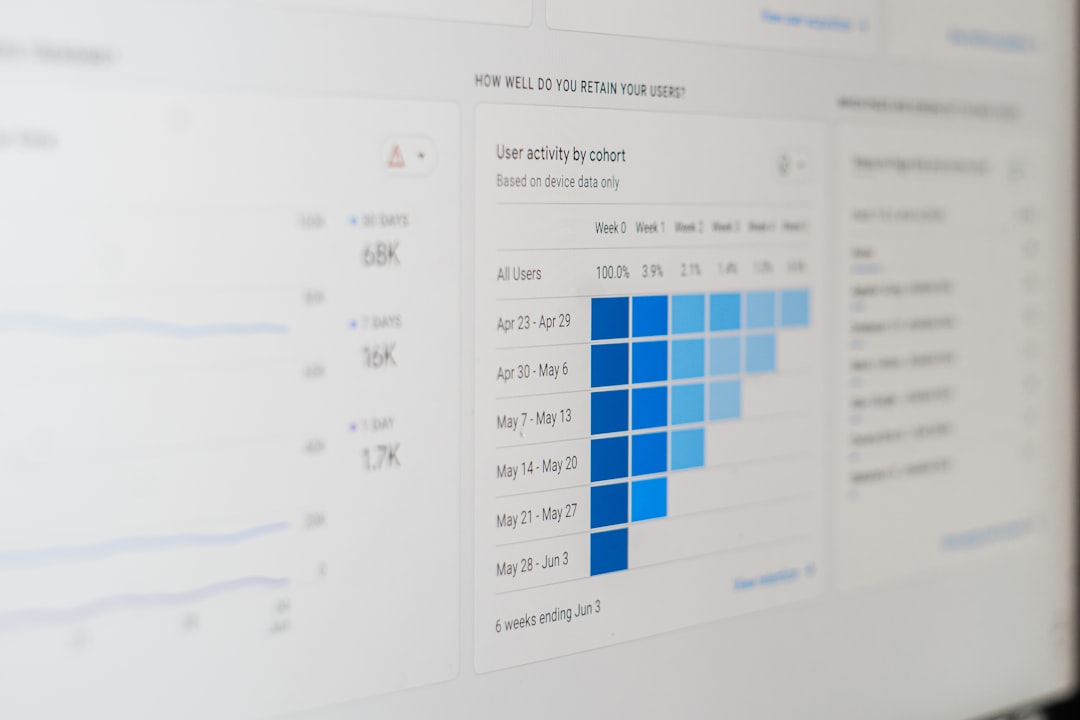
For instance, segmenting users based on demographics or behavior can uncover valuable insights about different audience groups. Additionally, employing advanced analytical techniques such as cohort analysis or funnel analysis can provide deeper understanding of user journeys on the website. Cohort analysis allows businesses to track specific groups of users over time to see how their behavior changes after certain interactions or events.
Funnel analysis helps identify where users drop off in the conversion process, enabling organizations to pinpoint areas for improvement. By interpreting data through these lenses, businesses can make informed decisions that enhance user experience and drive better outcomes.
Using A/B Testing to Optimize Website Performance

A/B testing is a powerful method for optimizing website performance based on empirical evidence rather than assumptions. This technique involves creating two versions of a webpage—Version A (the control) and Version B (the variant)—and comparing their performance against a specific metric, such as conversion rate or click-through rate. By randomly directing traffic to each version, businesses can determine which design or content resonates more effectively with users.
For example, an e-commerce site might test two different product page layouts: one featuring a large product image with minimal text and another with detailed descriptions alongside smaller images. By analyzing which version leads to higher sales or engagement rates, the business can make data-driven decisions about its design strategy moving forward. A/B testing not only helps optimize individual elements of a website but also fosters a culture of experimentation within organizations, encouraging continuous improvement based on user feedback.
Utilizing Heatmaps and User Session Recordings for User Behavior Analysis
Heatmaps and user session recordings are invaluable tools for gaining deeper insights into user behavior on a website. Heatmaps visually represent where users click, scroll, or hover on a page, providing a clear picture of how visitors interact with content. This information can reveal which areas of a webpage attract attention and which are ignored entirely.
For instance, if a heatmap shows that users consistently click on an image that is not linked to any action, it may indicate a missed opportunity for engagement. User session recordings take this analysis a step further by allowing businesses to watch real-time recordings of individual user sessions on their site. This qualitative data provides context around quantitative metrics; it helps identify pain points in the user experience that may not be evident through standard analytics alone.
For example, if users frequently abandon their shopping carts after struggling with navigation issues revealed in session recordings, businesses can take targeted actions to improve usability. Together, heatmaps and session recordings offer a comprehensive view of user interactions that informs design and functionality improvements.
Integrating Website Analytics with Other Marketing Channels
Integrating website analytics with other marketing channels is essential for creating a cohesive digital strategy that maximizes impact across platforms. By connecting analytics data from various sources—such as social media campaigns, email marketing efforts, or paid advertising—businesses can gain a holistic view of their marketing performance. This integration allows for better attribution modeling, helping organizations understand which channels contribute most significantly to conversions.
For instance, if an e-commerce site runs a Facebook ad campaign alongside email promotions, integrating analytics can reveal how each channel influences traffic and sales on the website. If data shows that users who engage with both channels have higher conversion rates than those who interact with just one, businesses can adjust their marketing strategies accordingly—perhaps by increasing investment in cross-channel campaigns or tailoring messaging to encourage multi-channel engagement. This comprehensive approach ensures that all marketing efforts work synergistically toward common goals.
Creating Custom Reports and Dashboards for Data Visualization
The ability to create custom reports and dashboards is crucial for effective data visualization in website analytics. Standard reports may not always provide the specific insights needed for decision-making; therefore, customizing reports allows businesses to focus on metrics that align with their unique goals and objectives. Most analytics tools offer features that enable users to build tailored reports based on selected dimensions and metrics.
For example, an organization focused on lead generation might create a dashboard that highlights key metrics such as form submissions, lead sources, and conversion rates over time. By visualizing this data through graphs or charts, stakeholders can quickly grasp trends and performance at a glance without sifting through extensive raw data. Custom dashboards also facilitate collaboration among teams by providing a shared view of critical metrics that inform strategy across departments—marketing, sales, product development—ensuring everyone is aligned toward common objectives.
Implementing Continuous Monitoring and Analysis for Ongoing Improvement
Continuous monitoring and analysis are vital components of an effective website analytics strategy. The digital landscape is dynamic; user preferences change rapidly due to evolving trends and technological advancements. Therefore, organizations must adopt an ongoing approach to analytics rather than treating it as a one-time effort.
Regularly reviewing performance metrics allows businesses to stay ahead of shifts in user behavior and adapt their strategies accordingly. For instance, setting up automated alerts for significant changes in key metrics—such as sudden drops in traffic or spikes in bounce rates—can help teams respond promptly to potential issues before they escalate into larger problems. Additionally, conducting periodic reviews of analytics data enables organizations to assess the effectiveness of recent changes or campaigns systematically.
By fostering a culture of continuous improvement driven by data insights, businesses can enhance their websites’ performance over time while remaining responsive to user needs.
Leveraging Website Analytics for Data-Driven Decision Making
Ultimately, leveraging website analytics for data-driven decision-making empowers organizations to make informed choices that enhance their online presence and drive business success. By utilizing insights gained from comprehensive analysis—ranging from user behavior patterns to campaign performance—businesses can develop strategies grounded in empirical evidence rather than intuition alone. This approach minimizes risks associated with decision-making while maximizing opportunities for growth.
For example, if analytics reveal that mobile users have significantly lower conversion rates compared to desktop users, organizations can prioritize optimizing their mobile experience through responsive design or improved loading speeds. Similarly, if certain content types consistently outperform others in terms of engagement metrics like time spent on page or social shares, businesses can focus on producing more of that content to meet audience demand effectively. In this way, website analytics become not just a tool for measurement but a strategic asset that informs every aspect of an organization’s digital strategy.
FAQs
What is website analytics?
Website analytics refers to the collection, measurement, and analysis of data related to website traffic and user behavior. It helps website owners understand how visitors interact with their site, which pages are most popular, and where improvements can be made.
Why are website analytics important?
Website analytics provide valuable insights that help businesses optimize their online presence, improve user experience, increase conversions, and make data-driven decisions to achieve their marketing and business goals.
What are some common metrics tracked in website analytics?
Common metrics include page views, unique visitors, bounce rate, average session duration, traffic sources, conversion rates, and user demographics.
Which tools are commonly used for website analytics?
Popular website analytics tools include Google Analytics, Adobe Analytics, Matomo, and Clicky. These tools offer various features for tracking and reporting website data.
How often should website analytics be reviewed?
Website analytics should be reviewed regularly, typically weekly or monthly, to monitor performance trends, identify issues, and adjust strategies promptly.
What are some best practices for using website analytics?
Best practices include setting clear goals, tracking relevant metrics, segmenting data for deeper insights, using event tracking, regularly auditing analytics setup, and combining quantitative data with qualitative feedback.
Can website analytics help improve SEO?
Yes, website analytics can identify which keywords and pages drive traffic, monitor user engagement, and highlight areas for SEO improvement, helping to enhance search engine rankings.
Is it necessary to comply with privacy laws when using website analytics?
Yes, compliance with privacy laws such as GDPR and CCPA is essential. This includes informing users about data collection, obtaining consent when required, and ensuring data is handled securely.
How can website analytics data be used to improve user experience?
By analyzing user behavior, website owners can identify navigation issues, optimize page load times, tailor content to audience preferences, and create a more intuitive and engaging site layout.
What is the difference between real-time and historical website analytics?
Real-time analytics provide immediate data on current website activity, while historical analytics offer insights based on accumulated data over time, useful for identifying trends and long-term performance.



0 Comments